


When I get frustrated with my dog, Mocha, she doesn’t argue and she doesn’t run off. She lies perfectly still on the floor, looks up at me with those puppy eyes, and waits.
She stays there until I soften. Until I kneel down, rub her ears and let her know we’re good.
It works every time. I’d love to say I’m nothing like her. I’m not so sure.
My version of puppy eyes is justifying myself. I explain. I over-explain. I defend a decision nobody attacked, then wait for the other person to tell me we’re good. It’s the same move as Mocha’s, just with more words.
Mocha isn’t being manipulative. She’s doing what any living thing does when someone she depends on is upset: she makes herself small and waits for the love to come back.
People do the same thing. We just use better words.
We say yes to the extra shift. We over-explain the decision. We soften the feedback until it isn’t feedback anymore. We take the work home so nobody else has to carry it. We watch the boss’s face, the client’s tone and the team’s mood, and adjust ourselves until everyone seems okay.
We all long to be accepted. The question is: at what cost?
People-pleasing isn’t a personality trait. It’s how some of us respond to pressure. Here’s how it runs:
That last step is where leaders burn out. Not in one big moment, but in a thousand small yeses.
I see this everywhere in veterinary clinics. These are people who care deeply: about the animals, the grieving owner at the counter, the colleague who’s drowning, the practice owner who needs the shift covered. Caring people slowly become pleasing people. And pleasing people run out of themselves.
No matter what you do, people will respond the way they choose to respond.
You can say yes to everything and someone will still be disappointed. You can bend over backwards and a client will still walk out angry. You can lie perfectly still with your best puppy eyes, and the other person still decides what happens next.
Their response was never yours to control. Pleasing is an attempt to manage something you don’t own, and you pay for it with your energy, your boundaries and, eventually, your presence at home.
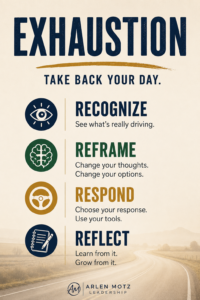
Lately I’ve been working through the 4 R’s on myself, not just teaching them. They’ve taught me more about who I am than I expected.
Recognize. I’m learning to notice what sets off my need for approval: the moment, the person, the tightness in my chest right before I start explaining. If I can’t see it, I can’t change it.
Reframe. Then I look at the situation differently. Their reaction isn’t a verdict on me. A raised eyebrow isn’t a request for a defence. Their response belongs to them.
Respond. When pressure hits, there’s a short window before your body decides for you. The 10-second window comes from the Pressure-Free Method by Elle Ingalls, and I’m certified in it. I use those tools to settle myself so I respond from steadiness instead of a need for approval. Sometimes that’s yes. Sometimes it’s no. Sometimes it’s “Let me get back to you.” No justifying required.
Reflect. Afterward, I look back at what worked and what didn’t, and I grow from it. That’s how a new response becomes a habit, and eventually who you are.
You’re responsible for your response. You’re not responsible for their reaction. And your team doesn’t experience your stress. They experience your response.
Mocha will keep giving me those puppy eyes. It’s who she is, and honestly, it still works on me.
But you’re not lying still on the floor waiting for someone else’s approval. You’re a leader. Pressure is inevitable. Response is a choice.
I teach leaders how to manage the pressure at work so they can show up present at home. If you’re wondering whether pleasing is running your pressure response, start with the Leadership Under Pressure Assessment. It’s free, takes 5 minutes, and scores you on all four R’s: Recognize, Reframe, Respond and Reflect.
Arlen
Get ready to start the season right. All the fan favorites in one place at the best price.