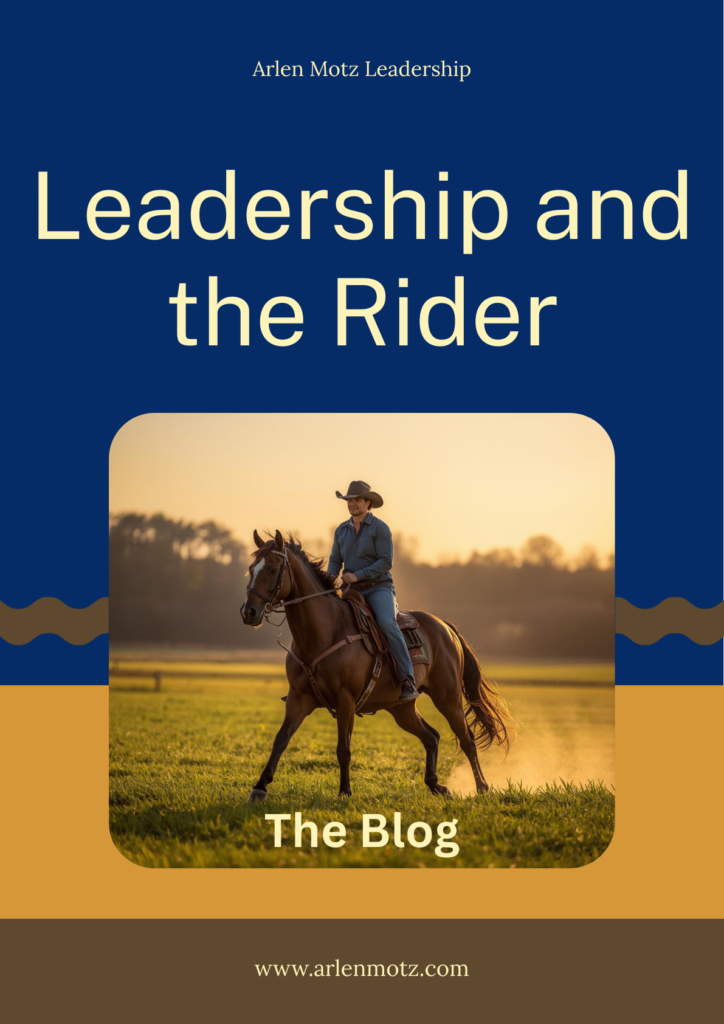
When you watch a skilled rider and a willing horse, you can’t always see the signals—but you can feel the trust. The ride looks smooth because both are clear, connected, and taking responsibility for their part. That’s what great leadership feels like too. Not force. Not fear. Alignment.
The Horse-and-Rider Lesson
On a good ride, the rider brings clarity and calm. The horse brings energy and responsiveness. Performance comes from the conversation between them—the smallest cues, the consistent follow-through, and the release when the right thing happens.
Leaders and teams are no different. If you’re pulling on the reins (over-controlling) or kicking harder (pushing for speed) without getting curious about your own seat (mindset and posture), you’ll get resistance, confusion, and burnout. When trust grows, the ride changes: intent is shared, cues are subtle, and progress becomes steady.
An Honest Moment from the Saddle
I’m not a polished rider. There are days I swing a leg over my trusted horse, Steve, and my mindset slides into panic. Here’s what I’ve learned the hard way: Steve reads me before I ever tighten a cinch. He catches the quickened walk to the barn, the shallow breath, the tight shoulders—the story I’m telling myself—long before I ask for a step. The ride hasn’t started, and we’re already out of sync.
Leaders do this too. When panic sets in, intentional perspective fades. Your team reads your state in the micro‑signals—timing, tone, pace, the way you change a plan at the last second. They react to you as much as to your words. If I don’t settle first, Steve tries to manage my anxiety instead of the task. Teams do the same.
A 60‑Second Reset (it works in your office interactions or the conference room):
Name it: “I’m amped right now.” Naming breaks the spell.
Return to one clear cue: What’s the next observable step?
Release quickly: Acknowledge the first correct step to re‑establish trust and rhythm.
Do this, and intention returns. The cues land. The ride changes.
What Trust Looks Like in Action
Clear intention before movement. A rider decides the line and gait before asking. Leaders need the same: decide the outcome before you direct. Vague goals create wobbly rides.
Simple, consistent cues. Horses learn patterns. So do people. Change the cue every week and you break the pattern—and the trust.
Pressure and release. In riding, you apply pressure to ask and release to say “that’s it.” In leadership, hold the standard, then release when you see the behavior you want. Celebrate the right thing, right away.
Self-regulation first. A tense rider makes a tense horse. Your state sets the tone. If you lead from reactivity, your team will mirror it.
Shared responsibility. A great ride is a partnership. The rider steers; the horse carries. As a leader, guide the path and let your team carry the work.
When the Ride Falls Apart
You’re forcing speed. You want a canter, but the team is still sorting out balance at the trot. Build rhythm before you push pace.
Your cues conflict. You’re asking for initiative while micromanaging the details. That’s like pulling back while asking the horse to move forward.
You skip the release. If there’s never a moment that says, “Yes, that’s it,” your team never learns what good looks like.
Your seat isn’t steady. Mood swings, shifting priorities, or blame break trust faster than any missed deadline.
A Simple Pre‑Ride (Pre‑Meeting) Checklist
Before you ask your team to move, pause for two minutes:
Outcome: What exactly do we need by when? (Write one clear sentence.)
Role: Who owns what? (Name the 1 owner, 2 contributors.)
Cue: What is the simple next step? (Make it observable.)
Standard: What does “good” look like? (Two bullets max.)
Release: How will I acknowledge progress the moment I see it?
State: Am I calm, clear, and present? If not, what needs to settle first?
Turn Cues Into a Yes
Horses learn through repetition. Teams do too. Translate your cues into working agreements:
“We write outcomes in one sentence.”
“We choose an owner for every task.”
“We store plans in one place and review them weekly.”
“We name what good looks like before we start.”
“We celebrate progress publicly and learn privately.”
These agreements reduce friction and build a rhythm your team can trust.
A Word on Control vs. Clarity
Control creates compliance. Clarity creates commitment. If you catch yourself tightening the reins, ask: What do I need to clarify instead?
Clarify the why: Why this matters now.
Clarify the line: Where we’re headed.
Clarify the cue: What happens next.
Clarify the release: How we’ll know we hit it.
Try This With Your Team This Week
Start your next meeting with the two‑minute Pre‑Ride Checklist.
Replace one vague request with a clear cue and a fast release.
Run a short After‑Action Review: What did we ask for? What happened? What will we do differently next ride?
Closing Thought
The best rides look effortless because they’re the product of trust built over time.
As a leader, your job is to bring calm, clarity, and consistentcy—then release when you see the right movement. Do that long enough, and your team will carry more distance with less strain.
Want help building this kind of trust? I mentor small‑business leaders who are ready to stop relying on fear and control and start building clarity, trust, and sustainable influence. See client stories andbook a short call.